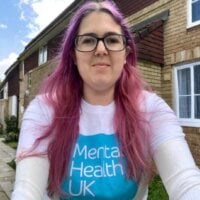
Karishmeh’s story
Karishmeh reflects on navigating bipolar disorder as an Indian-Iranian woman and how committing to treatment helped her rebuild her life.
"The psychotic episode came out of nowhere – it felt as though we were suddenly dealing with a forest fire."
Born in India to an Iranian family and married to an Irishman, I’ve experienced quite a few culture shocks in my adult life. But none more than in my mental health journey with bipolar disorder. I’ve spent the past thirteen years battling this condition.
Before receiving my diagnosis, I’d already built a successful career as a classical pianist and piano teacher. I’d also spent time presenting on BBC Radio 3 and was studying for a fully funded Music PhD in the UK.
Navigating mania and psychosis
In June 2013, when I was thirty, after entering university for the first time as a graduate music student, I was diagnosed with type one bipolar disorder after experiencing a major psychotic break. Even though there were some warning signs (irritability, weepiness, disrupted sleep), the psychotic episode came out of nowhere – it felt as though we were suddenly dealing with a forest fire.
Receiving the diagnosis came as a huge shock for my husband Stephen and me as neither of us had any experience of serious mental illness. I was hospitalised and treated with a combination of a mood stabiliser and an anti-psychotic.

Given my cultural background, I was scared about undergoing treatment and taking medication – in my experience, mental illness is not properly understood back home in India.



During this time, there were many clashes and differences in attitudes between my family and Stephen. My family didn’t want me to be on medication long-term, and my husband was doing his very best to get me the medical care I needed.
I struggled to fully commit to treatment and medication, partly due to side effects and partly because I felt I could manage the illness myself. I didn’t recognise the severity of my condition at all. Because of this, I ended up experiencing many serious episodes of mania and psychosis over the next seven years.
One relapse took place whilst I was studying. In my unwell state, I experienced a manic outburst on Twitter and subsequently lost my place at a top UK university. Although the university staff were sympathetic about my illness, I was unable to continue my studies after my episode. Given how hard I worked to receive this PhD scholarship, the loss of my doctorate was truly devastating. This episode caused me to spiral downwards into a deep depression, and I moved back to India for a few months to regroup.
I managed to transfer to a different university, hoping that the stability I’d achieved at this point would make it possible to move on and progress my studies. Stephen and I moved to Castlebar, a small town in the west of Ireland, and I transferred my treatment to the primary care team there. The process of trial-and-error of antipsychotics continued.
My mental health crisis point
I managed to stay well for just a few months. In May 2018, I relapsed again. In a state of high mania, I fought with Stephen and ran away, taking the first flight to London. Despite him working tirelessly with the authorities to bring me home, I resisted all help, becoming more and more ill with psychosis.
Ultimately, I ended up freezing cold, without a smartphone or money, sleeping in Hyde Park. I was on the streets of London for a total of six months in 2018. Finally, in a moment of clarity, I called 999 from a phone box in early January 2019. I was hospitalised for five months, during which I was finally able to receive the consistent medical treatment I needed.
How I’ve stayed well
After that long stint in hospital, I’ve managed to stay stable and well – the occasional wobble notwithstanding.
I’ve finally committed to taking treatment and antipsychotics long-term. Since 2019, I haven’t required hospitalisation, and in 2021 I finally completed my PhD in Music.
Through a combination of medication, CBT therapy, art therapy, writing therapy, professional support and personal commitment to my recovery, I feel I’m in a better place.
Rebuilding a life with my husband Stephen has given me meaning and purpose. While we still struggle with many issues, for example, lack of long-term housing, I’m much better at handling stress now. We even care for a colony of feral cats, who provide a constant source of fun and joy to our lives.
I hope that by sharing my story, I inspire others who have been affected by bipolar disorder to persevere with treatment and seek professional support, even when it appears that all is lost.
Information and support
Your donation will make the difference
Just £10 could allow 25 people to access the Mental Health & Money Advice website to help them improve their financial and mental health.
Donate today

Sign up to balance, our free monthly newsletter
Each edition is packed with useful mental health tips, stories of impact and fun ways you can get involved with the charity.