Talking to your GP about mental health

Talking to your GP about your mental health can feel like a big step. You might feel worried about what to say, unsure whether your experiences are “serious enough” to ask for help, or concerned that you may become emotional during the appointment. These feelings are very common.

This guide explores when it may be helpful to speak to your GP, how to prepare for the conversation, what you might want to say and what you can expect from your appointment.

Patient talking to their GP

How this guide can help you prepare for your GP appointment

This guide can help you:

  • Understand when to speak to your GP

  • Prepare what information to share

  • Know what questions your GP may ask

  • Think about questions you may want to ask

  • Understand possible treatment and support options

  • Know your rights when accessing healthcare

  • Understand what happens after your appointment

When should I see my GP about my mental health?

You might want to speak to your GP if you notice changes in how you feel, think or behave, or if something doesn’t feel right, such as anxiety, low mood, stress, burnout or intrusive thoughts.

You don't need to wait until things feel unbearable to ask for support.
You don't need to have a diagnosis or know exactly what is causing how you feel.
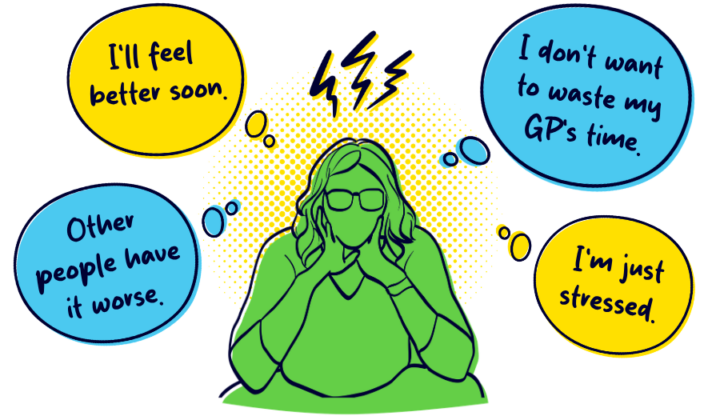
Illustration of thought bubbles about not going to GP

Many people delay speaking to their GP because they hope things will improve on their own, feel they should be able to cope, or worry about taking up their GP’s time.

These common thoughts can stop people from seeking support. Just as you would speak to your GP if you noticed a change in your physical health, experienced symptoms that worried you or felt that something wasn’t right, the same applies to your mental health.

A survey conducted by Mind in 2018, found that around 40% of GP appointments involved mental health, showing that it’s a common part of general practice.

Speaking to your GP when you first notice changes can help you understand what you are experiencing, explore the support and treatment options available, and take steps that may help prevent things from becoming more difficult over time.


What might prompt you to see your GP about your mental health?

Mental health affects how we think, feel and behave and influences many areas of our lives, including our relationships, confidence, work, studies, and physical health.

You might notice that you are:

  • Feeling anxious, low, overwhelmed or unable to cope
  • Finding everyday tasks harder than usual
  • Struggling to concentrate or make decisions
  • Avoiding people, places or situations
  • Experiencing changes in your sleep, appetite or energy levels
  • Feeling emotionally exhausted or unlike yourself
  • Losing interest in things you usually enjoy
  • Finding work, education, relationships or caring responsibilities harder
  • Using coping strategies that are no longer helping you

Changes can happen gradually, which can make them difficult to recognise. Your GP can help you understand what you are experiencing and explore what support may be right for you.

How can my GP help with my mental health?

Your GP can:

  • Listen to what you are experiencing

  • Help you understand what may be contributing to how you feel

  • Check whether physical health is affecting your mental health

  • Discuss treatment and support options

  • Recommend self-help approaches

  • Prescribe medication where appropriate

  • Refer you for further assessment or specialist support

  • Signpost you to local services and community support

Booking your GP appointment

Taking the first step and contacting your GP surgery can feel like the hardest part.

You can book an appointment in various ways, depending on your practice – through the NHS App, online, by phone or in person. Choose whichever feels most comfortable; you don’t need to share personal details with reception staff if you don’t wish to.

Friend accompanying man to GP appointment

Some practices use triage before offering an appointment, while others allow you to book directly with a GP. You may also be offered an appointment with another healthcare professional, such as a mental health practitioner or nurse. This is a normal part of GP care, although availability varies by Primary Care Network.

You can ask to see any GP in the practice, not just your designated GP. If available, you can request a GP with an interest in mental health or a longer appointment.

If contacting your GP feels difficult, someone you trust can support you by helping you contact the surgery or prepare what to say. You may need to give permission for them to discuss your healthcare with the practice

You may also be able to refer yourself directly to NHS Talking Therapies without seeing a GP first, depending on where you live.

Tools for talking to your GP about your mental health

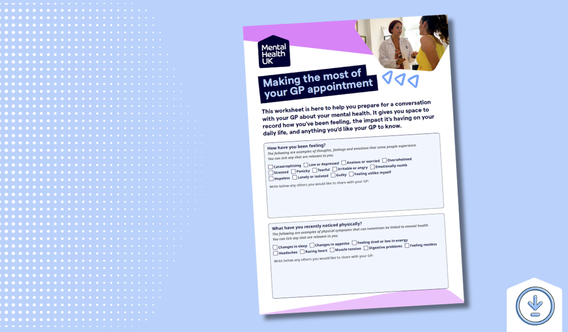
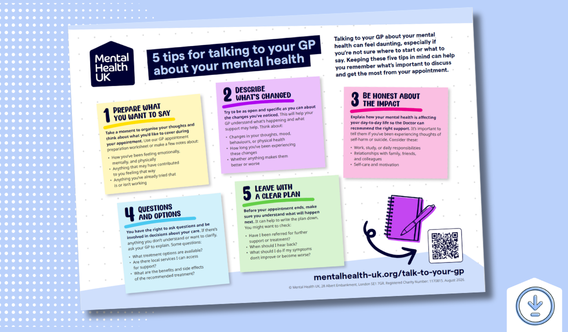
These tools help you prepare for a conversation with your GP, from a quick five-tip prep sheet to a detailed worksheet, alongside a poster to promote these in your community.

Worksheet

Make the most of your GP appointment prep sheet

5 tips for talking to your GP about mental health

Talk to your GP about mental health poster

Preparing for your appointment

Preparing can help you feel more confident. You could make notes about what you want to share, practise with someone you trust, or say it out loud if you’re worried about finding the right words.

You don’t need to have everything worked out or remember everything. Preparing isn’t about following a script, it’s about feeling more comfortable starting the conversation.

You might find it helpful to write down:

  • What you've been experiencing:

    Include emotional, physical and behavioural changes, how long they've been happening, and any patterns you've noticed. For example, "I feel more anxious at work than when I'm with friends."

  • How it's affecting your daily life:

    Such as your work, education, relationships, caring responsibilities or everyday activities. It can help to include specific examples, such as finding it difficult to concentrate, avoiding certain situations or struggling with everyday tasks.

  • Changes in your physical health:

    Such as changes to your sleep, appetite, energy levels, headaches, a racing heart or other unexplained aches and pains.

  • Recent events or stresses:

    Such as bereavement, relationship difficulties, work pressures, financial worries or other significant life events.

  • What you've tried already:

    Such as talking to friends or family, exercise, mindfulness, journalling, meditation or other coping strategies.

  • What you hope to get from the appointment:

    For example, reassurance, treatment options, talking therapies, a referral for further assessment or simply a better understanding of what might be happening.

Taking someone you trust with you

You don't have to attend your GP appointment alone.

A person talking whilst being supported by friend

With your permission, a trusted friend, family member or carer can:

  • come with you to the appointment
  • help explain how you’ve been feeling
  • remind you of things you wanted to mention
  • take notes during the appointment
  • help you remember what was discussed afterwards
  • provide emotional support.

Before your appointment, it can help to agree how you’d like them to support you. For example, you may want them to listen quietly or prompt you if you forget something. If your appointment is by phone or video, you can let your GP know that someone is with you for support.

You may need to give your GP practice permission before they can discuss your healthcare with someone else.

If you need communication support

Everyone communicates differently, and it’s OK to ask for support that helps you access healthcare.

If you’re neurodivergent (for example, autistic or have ADHD), have a learning disability, a hearing impairment, or another condition that affects communication, let your GP surgery know beforehand.

If English isn’t your first language, you can ask your GP surgery to arrange an interpreter or provide translated written information. In England, you have the right to receive information in a way that you can understand. If appropriate, you may also wish to ask someone you trust to help you communicate.

You can also ask for reasonable adjustments, such as:

  • extra time for your appointment (double appointment)
  • written information alongside verbal explanations
  • communication support
  • a quieter environment
  • changes to how information is shared

If there’s anything else that would help you feel more comfortable or communicate more easily, ask your GP surgery what support they can provide.

Starting the conversation with your GP about your mental health

It’s understandable to feel nervous about starting the conversation.

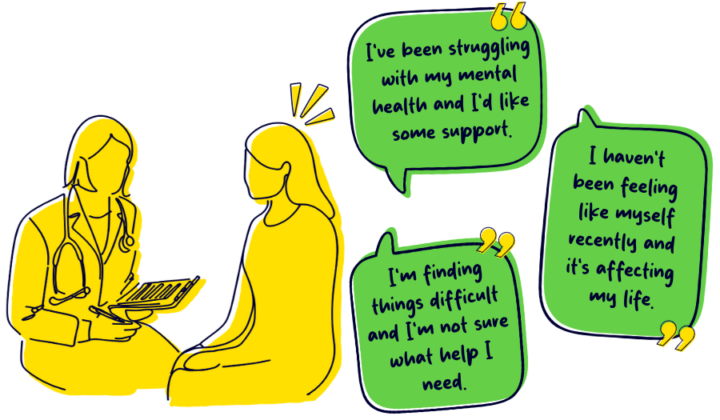
Illustration of speech bubbles with ideas on how to start talking to your GPIllustration of speech bubbles with ideas on how to start talking to your GP

Everything you tell your GP is confidential.

They will not normally share information about your mental health without your permission, except in specific circumstances, such as if they believe there is a serious risk of harm to you or someone else. Find out more

If they need to share information, they should usually explain this to you and talk through what happens next.

You don’t need to know exactly what to say or explain everything perfectly. 

Your GP is used to having conversations about mental health. You could start with the examples to the right.

Letting your GP know you feel anxious can help them understand and allow them to support you. You could say: “I’m feeling nervous talking about this.”

What should I tell my GP about my mental health?

It might feel difficult to talk about your experiences, but being as open and honest as you can will help your GP understand what you're going through and explore the support that's right for you.

Sharing what's been happening is enough to start the conversation.

Illustration of sun and cloud for mood

Your symptoms

Try to be specific about what you’ve noticed, including:

  • how you’ve been feeling emotionally
  • any changes in your thoughts or behaviour
  • any changes in your sleep, appetite, energy or unexplained aches and pains
  • when these changes started
  • whether they’re getting better, worse or the same.
Illustration of everyday life sleep, exercise, appetiteIllustration of everyday life sleep, exercise, appetite

Impact on everyday life

Your GP may ask how your mental health is affecting different areas of your life, including:

  • work, education or caring responsibilities
  • relationships
  • social activities
  • sleep, appetite and self-care
  • motivation
  • things you usually enjoy.
Illustration of signpost, broken heart, clouds and money representing life changeIllustration of signpost and clock to represent life change

What may have contributed

It can be helpful to talk about anything that may have affected your mental health, including:

  • stressful life events
  • bereavement or loss
  • relationship difficulties
  • trauma or difficult experiences
  • changes at home, work or school
  • anything else you feel may have contributed to how you’ve been feeling.
Illustration of a heart beat and ECG

Your medical history

Your GP may also ask about:

  • your physical health
  • any previous mental health difficulties
  • treatments or support you’ve tried before
  • any family history of mental health conditions, if known.
Illustration pof wine bottle, tablet bottle and tablets

Alcohol and drug use

Your GP may also ask about:

  • your alcohol use
  • any drug use
  • any changes in your use
  • how these may affect your mental health or treatment

Being open and honest can help your GP recommend the safest and most appropriate support.

Self-harm or thoughts of suicide

Your GP may ask whether you’ve experienced thoughts of harming yourself or ending your life.

These questions can feel difficult, but answering honestly helps your GP understand what support you need and how they can help keep you safe.

If you’re worried about your mental health and need urgent help, you can call NHS 111 and select the mental health option. If you’re in immediate danger or cannot keep yourself safe, call 999 or go to A&E.

What happens during a mental health appointment with your GP?

Many people feel unsure about what will happen when they talk to their GP about their mental health.

Your GP or mental health practitioner may:

  • Ask questions about how you have been feeling
  • Discuss what support options might be helpful
  • Explore whether medication, therapy or other approaches could help
  • Arrange follow-up appointments
  • Check whether physical health factors could be contributing to how you feel
  • Suggest referring you to a specialist mental health team

Physical health checks

Your GP may suggest physical health checks, such as blood tests, blood pressure or weight checks, to rule out physical causes and monitor your health. These checks may be repeated, particularly if you start medication.

If any check feels difficult or distressing, tell your GP. For example, if being weighed is upsetting because of an eating disorder or body image concerns, you can ask for your weight not to be read aloud unless it’s clinically necessary.

Patient looking at results GP is howing her

Making decisions with your GP

You should be involved in decisions about your care. Your GP should explain your options, answer your questions and give you time to decide what feels right for you.

You can ask questions about understanding what’s happening, exploring your options, learning about your treatment and what happens next.

Read some examples below.

"Can I check I've understood that correctly?"

“What support options are available to me?”

“Are there alternatives I could consider?”

“Are there local services or groups that could support me?”

“How long might this treatment take to work?”

“What are the benefits and possible risks of this treatment?”

“What side effects might I experience?”

“When should we review how things are going?”

What if I become emotional during my appointment?

Many people worry they will cry, freeze, forget what they wanted to say or become overwhelmed. This is completely normal and understandable.

Talking about your mental health can mean discussing experiences that are painful, frightening, or difficult to put into words.

If this happens, you can:

  • Let your GP know if you are finding the conversation difficult
  • Take your time
  • Refer back to your notes
  • Ask for a moment if you need one

Remember, you don’t need to present your experiences perfectly. Your GP’s role is to listen, understand, and help you explore support.

Your rights and if you're unhappy with your care

Understanding your rights can help you feel more confident when speaking to healthcare professionals and taking an active role in your care.

Your rights

When accessing healthcare, you have the right to:

  • Be listened to and treated with dignity and respect
  • Be involved in decisions about your care
  • Receive clear information about your treatment and support options
  • Ask questions and have things explained if you don’t understand
  • Have your information kept confidential
  • Consent to or refuse treatment

There are some exceptions, such as where there are immediate concerns about your safety or someone else’s, or where specific legal processes apply. For more information, visit Rethink Mental Illness.

Your GP will make notes about your appointment on your medical record. You can request access to your health records.

If you're unhappy with your care

Sometimes an appointment may not feel as helpful as you hoped. You might leave feeling unheard, unsure what happens next or unclear about your options. If this happens, you can:

  • Book another appointment to continue the conversation
  • Ask for more information about your treatment or support options
  • Explain that you would like more support
  • Ask why a particular approach has been suggested

If you’re still unhappy with your care, you can raise your concerns with your GP practice, including speaking to the practice manager or using its complaints process.

You can also contact the NHS Patient Advice and Liaison Service (PALS) for confidential advice and support with concerns about NHS services.

After your appointment: what happens next?

Speaking to your GP is an important step, and it’s normal to have mixed feelings afterwards. You might feel relieved that you have finally spoken to someone, hopeful about getting support, worried about what happens next, or unsure whether the next steps feel right for you.

Take some time to reflect on your appointment. You may find it helpful to ask yourself:

  • Did I feel listened to and understood?
  • Do I understand what happens next?
  • Do I know how to access the support that was discussed?
  • Are there any questions I still have?
  • Do I feel involved in decisions about my care?

If you feel unsure about the advice you were given, do not understand your next steps, or need more time to discuss your options, you can ask for another appointment.

Remember, one appointment doesn’t define your experience. You have the right to ask questions, seek further support and be involved in decisions about your care.

Understanding your treatment and support options

After talking through your experiences, your GP may suggest different types of support.

What is appropriate will depend on your circumstances, what you are experiencing, your preferences and what is available in your area.

You may be offered:

Further appointments or assessment

Your GP may arrange another appointment to explore your mental health in more detail, carry out further assessment or review any tests before deciding on next steps.

Diagnosis

Your GP may discuss whether your symptoms could be linked to a mental health condition, such as anxiety or depression.

In some cases, they may be able to diagnose common mental health conditions. In others, they may recommend further assessment or refer you to specialist mental health services if more information is needed.

You do not always receive a diagnosis straight away, and you do not normally need a diagnosis to access support.

Talking therapies

Talking therapies and specialist support: Your GP may refer you for further assessment, talking therapy or specialist mental health support, such as your local Community Mental Health Team. The type of support available will depend on where you live and what you need.

If you live in England, you can self-refer to NHS Talking Therapies without needing a GP referral. Waiting times vary depending on where you live and the type of support you need, so ask your GP about expected waiting times and whether there is any support available while you wait.

You can also explore local support through Hub of Hope, which lists mental health services, support groups and organisations by location. The NHS mental health services pages and your local council’s website can also help you find local services, charities and community support.

If you choose to access private therapy, the British Association for Counselling and Psychotherapy (BACP) directory can help you find registered therapists by location and area of expertise.

Medication

Your GP may discuss medication as one option. They should explain why it is being recommended, how it may help, possible side effects, how long it may take to work, how your progress will be monitored and what alternatives may be available.

If you are prescribed medication, it should come with a patient information leaflet explaining how to take it, possible side effects and other important information. If anything is unclear, ask your GP or pharmacist to explain it.

Some medications, including many antidepressants, can take several weeks before you notice their full effect. Your GP will usually arrange a follow-up appointment to see how you are getting on and whether the medication is helping.

Finding the right medication can sometimes involve trying different options, as what works for one person may not work for another. If you experience side effects or feel the medication is not helping, speak to your GP before making any changes. They can discuss your options and advise you on the safest way to adjust or stop your medication.

Social prescribing

Your GP may suggest speaking to a link worker, also known as a social prescriber. They can connect you with practical, social and community-based support that could benefit your wellbeing, such as activity or support groups, charities and other local services. You can ask your GP about social prescribing or, in some areas, self-refer.

Lifestyle and self-help

Your GP may suggest approaches such as improving sleep, increasing physical activity, managing stress, mindfulness or relaxation, staying connected with others, or accessing community support.

Looking after yourself while you wait for support

Depending on your circumstances and where you live, your GP may refer you for further assessment, talking therapies or specialist support.

Waiting for support can feel difficult - but you don’t have to cope alone.

While you wait, you could:

  • Stay connected with people you trust
  • Keep track of your mood, symptoms or any changes you notice using a journal, app or notes on your phone
  • Use wellbeing tools, self-help resources or information from trusted organisations
  • Continue activities that support your wellbeing where possible
  • Explore local community groups or support services
  • Contact your GP again if your symptoms change, become harder to manage, or you need further support.

Other practical considerations

Depending on your situation, there may be practical things you need to think about after speaking to your GP.

  • Driving: If you’re diagnosed with a mental health condition or start taking medication that could affect your ability to drive, you may need to tell the Driver and Vehicle Licensing Agency (DVLA). You can check the UK Government guidance to find out whether you need to report a change in your health.
  • Insurance: If you have travel or health insurance, you may need to inform your provider about any changes to your health or treatment.

Supporting a young person with their mental health

Spotting signs and talking to a young person

It can be difficult to know what to do when you notice a young person struggling with their mental health. You may notice changes in their mood, behaviour or everyday life, or they may tell you they are finding things difficult.

You might notice changes such as:

  • Becoming more withdrawn or losing interest in activities
  • Changes in mood, sleep, appetite or energy
  • Struggling with school, work, relationships or everyday tasks
  • Expressing feelings of hopelessness or being unable to cope
  • Using alcohol, drugs or other behaviours to cope

These changes do not necessarily mean they have a mental health condition, but may indicate they need extra support.

When talking to them, choose a calm moment and focus on what you have noticed rather than making assumptions. For example: “I’ve noticed you haven’t seemed yourself recently. How have you been feeling?”

A GP can help them understand what they are experiencing and explore what support may be available.

Helping a young person prepare for their GP appointment

You can support them by:

  • Helping them think about what they want to say
  • Encouraging them to write down anything they want to remember
  • Helping them think about questions they may want to ask
  • Reassuring them that they do not need to explain everything perfectly
  • Helping them understand what may happen during the appointment

You could also offer to go with them if they would like your support.

Some young people may prefer to speak to their GP independently, so it is important to ask what they would find most helpful.

Visit YoungMinds' guide

Can I attend my child’s GP appointment with them?

For younger children, a parent, guardian or someone with parental responsibility will usually attend the appointment with them.

As children get older, they may choose to have a parent, guardian or another trusted adult with them for support, or they may prefer to speak to their GP on their own for part or all of the appointment.

GPs will consider a young person’s age, maturity, ability to understand and make decisions about their healthcare, as well as their right to confidentiality. They will always aim to act in the young person’s best interests.

If you’re unsure what to expect, your GP surgery can explain how appointments are managed for children and young people.

If the young person doesn’t want help

It can be very difficult if you are worried about a young person, but they do not want to speak to anyone.

You can’t force someone to open up, but you can continue to:

  • Let them know you are there when they are ready
  • Keep conversations open and non-judgemental
  • Remind them that support is available
  • Encourage small steps, such as speaking to someone they trust

If you’re worried about your child’s mental health and need urgent help, you can call NHS 111 and select the mental health option. If your child is in immediate danger or you cannot keep them safe, call 999 or go to A&E.

Young people's rights

Young people have their own rights around healthcare, confidentiality and involvement in decisions about their care.

If you’re concerned about your child or young person’s mental health, your GP surgery can explain what support is available and how you can be involved.

You can also find advice and information for parents and carers on supporting children and young people’s mental health through the NHS.

Book an appointment

Remember

  • If something doesn’t feel right, it’s OK to speak to your GP.
  • You don’t need to wait until things become unbearable.
  • Taking the first step can feel difficult, but you don’t have to take it alone.
  • You don’t need to have all the answers.
  • You don’t need to explain everything perfectly.
  • Support is available, and you deserve to access it.

If you’re ready, your next step could be booking an appointment.