
At Mental Health UK, we see how closely these challenges are linked to mental health. When opportunities feel out of reach, it can affect confidence, wellbeing and a sense of future direction.
This is a complex issue — and one where the way we talk about it matters. The language used to describe young people can shape how they are perceived, how they are supported, and how they see themselves.
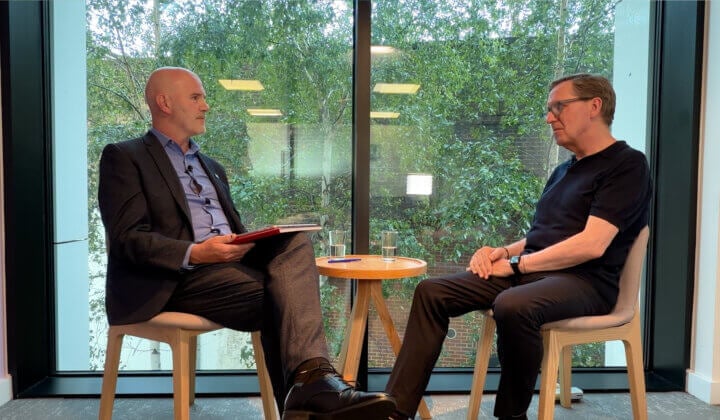
In this piece, Brian Dow, Chief Executive of Mental Health UK, reflects on the term “NEET” — and why it may be time to rethink how we frame this conversation.
“NEETS”: Why it’s time to move on from this lazy label
We British love an acronym. IMHO
Opposed to housing in your local area? That makes you a NIMBY (Not In My Back Yard). Personal finances precarious but not impossible? Then you’ve become a JAM (Just About Managing). No need to have FOMO (Fear Of Missing Out), another one will be along in a minute, and it will almost certainly be the GOAT (Greatest Of All Time).
And now, the return of a familiar label: “NEETs” – used to describe those aged between 16 and 24 who are not in education, employment, or training.
Understandably, this issue is receiving increased attention with around 1 in 8 young people currently in this position, it represents a significant social and economic challenge. But addressing it isn’t just about policy or labour market conditions – it’s also about how we frame the conversation without stigmatising young people. Put simply, many young people are not out of work or education because they are unwilling. Increasingly, we are hearing from individuals applying for hundreds, sometimes thousands of roles without success. This reflects a wider reality: many are coming of age in a world where opportunities are limited and uncertain.
A complex reality behind a simple label
The labour market has shifted significantly in recent years. Government data shows a rapid decline in job vacancies in the last 3 years, particularly in sectors such as retail and hospitality, which traditionally provided entry routes into work for young people. At the same time, competition for roles has increased, while rising living costs are adding further pressure.
For those already experiencing poor mental health, the situation is even more complex and challenging. NHS mental health waiting lists are unacceptably long, with nearly 1.8 million people in England alone currently waiting for help but unable to get it. Without timely help, many young people are left trying to manage anxiety, low mood or stress on their own while also navigating job applications and uncertainty about the future.
In this context, accessing work or training can feel overwhelming rather than achievable. It’s less about an unexplainable lifestyle choice by young people and more like the inevitable realities of the world they are navigating.
There are encouraging signs, and it’s heartening to hear and see the evidence of shifting Government rhetoric around the issue. At the launch of the new Youth Guarantee announcement made by the Secretary of State Pat McFadden, there was a greater focus on youth employment initiatives designed to support people into work – acknowledging that we all need to play our part.
Our pioneering employment service, Into Work, is a prime example of this, building on the fantastic evidence base created by the Individual Placement Support (IPS) scheme being rolled out at present. Combining employment support with an understanding of mental health can help people move forward in a way that works for them.
Moving the conversation forward: focusing on solutions, not assumptions
Let’s be clear – good work is good for mental health. It is in absolutely no-one’s interest that many young people are stuck without employment or training opportunities. Work gives people purchasing power; it provides structure and order. It can speak to higher order principles like engagement in a social unit, development of life skills and for many people the place to make lifelong friends and in some cases even a future partner.
With growing recognition that more needs to be done to support young people into education and employment, we cannot return to unhelpful narratives that are scathing and stigmatising. Language matters. The terms we choose can either reinforce barriers or help to create a more constructive path forward.

Our young people are our future and in them we must believe, hope and invest. Rather than defining young people by what they are not, we should focus on what they need.
So let’s ditch the term NEET in in favour of SWEET – Stuck Without Education, Employment or Training.
Shifting the emphasis of blame towards understanding. This respects people and the challenges they face, reframing the focus as something impacting on young people as opposed to being caused by them.



This means strengthening pathways into work, ensuring mental health support is accessible when it is needed, and creating opportunities that reflect the realities young people face today. With the right support, tools and investment, young people can navigate challenges and build positive futures for themselves and their communities – as set out in our Strategy.
Shifting the conversation is one step. Britain is not full of NEETs who need admonishing, but SWEETs who need support and are entitled to hope.
Explore our programmes that support people to move forward, including Into Work — our holistic employment service offering wraparound support for people living with mental health conditions — and our young people’s programmes, including Bloom, Your Resilience and Me & Money, which help build confidence in young people to navigate life’s challenges.
References and sources:
- Young people not in education, employment or training [Office for National Statistcs]
- Neets: One in eight young people not in work or education [BBC News]
- UK job market squeezed as economy set to worsen [CityAM]
- Right Treatment, Right Time 2025 [Rethink Mental Illness]
- Welfare state to working state [Gov.uk]