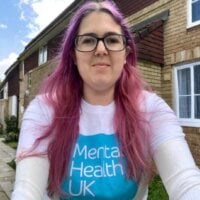
Joshua’s story
Joshua’s mental health issues came to a head when he lost his job and long-term relationship. He shares his experience of burnout at work, living with borderline personality disorder (BPD), and an undiagnosed disability.
Trigger warning: This article mentions suicide
"If it wasn't for one of the managers convincing me to listen to my doctor, telling me that “no job is worth your life” - I don't know where I'd be."
My mental health troubles started to show after leaving school in 2004, when I was working in a call centre at 17. I had time off work due to stress and constant complaints from customers. At that time, there was no protection or help for people with mental health problems in the workplace. I also found it extremely difficult to navigate the amount of information I had to remember for that job.
Then in 2007, I got my second job working in retail.

My anxiety went through the roof when I had to do night shifts all on my own. No-one else was in the building, just me.
This lasted about three years.


I was at university full-time during the day, then did my shifts at night. I was always able to put a lid on my anxiety, but having been bullied for years at school, I found it difficult when I was alone in the shop or having to deal with disruptive teenagers.
It wasn’t until I moved to Scotland after graduating that I really started to be affected. I wasn’t able to find a full-time job and unfortunately some people, particularly my partner’s friends, thought part-time hours was to be frowned upon. I worked in a card shop, cafe, garden centre, and retail stores, but came across the same issues: I was just not “quick enough”, struggled with numbers, organisation, memory, and communicating with people.
My goal was to be a visual merchandiser, so I could put my art degree to good use. I was stepping towards that the best way I could, but found that I was held back. It wasn’t until a mutual friend told me that I discovered I was getting bullied and discriminated against at work. At this point, my relationship was rocky and my family was 250 miles away. So, I stuck it out without support.
I wasn’t diagnosed with anything at this point, but every day, I felt it was getting worse. I was expected to do everything at work all on my own. The manager would be in the back watching me, calling every 30 minutes to ask why something wasn’t done. I was scared of getting fired again. Eventually, a 30-hour role within the company came up and I applied, but didn’t get it. They said they wanted “someone who can handle a 30-hour contract”.
October, 2014 was probably the worst time of my life. Whilst living in Scotland with my partner at the time, my mental health took a disastrous turn, ultimately ending a six-year relationship, friendships, and career.
My mental health was really bad and I only went to the doctor’s because I had thoughts of suicide. I was diagnosed with depression, along with anxiety.
Although I got a sick note, I was still thinking that it was all my fault and offered to stay on working.
If it wasn't for one of the managers convincing me to listen to my doctor, telling me that “no job is worth your life”, I don't know where I'd be.
When I moved back home at the end of 2014 my new doctor diagnosed me with Borderline Dependent Personality Disorder due to the trauma of my breakup. I spent years working with different therapists, eliminating what caused me stress and I had to learn not to rush and enjoy life again.
In 2022, when I was doing my second stint at university, an educational psychologist found out I had dyscalculia and attention-deficit/hyperactivity disorder (ADHD). Then, a year later I had my first episode of what seemed like a seizure which led to tests and discovered I have a slow wave disturbance over my temporal region of my brain, which causes other issues.
All my life, I’ve been living with undiagnosed conditions, which has contributed to my mental health issues. Even now, I still struggle with memory problems, relationships, employment, and in some cases, life. Navigating people’s opinions because I’m not meeting their expectations is exhausting. So, I find what I can do. I write, I do photography, I grow cacti, and try to live. For the past decade, what I’ve learnt is that we have to do what’s right for us, to not be embarrassed about our problems or disabilities, but listen to ourselves and our bodies.
Information and support
Borderline Personality Disorder
Workplace and mental health
Explore our guidance and tools Employment Resource Hub
Your donation will make the difference
Just £10 could allow 25 people to access the Mental Health & Money Advice website to help them improve their financial and mental health.
Donate today

Sign up to balance, our free monthly newsletter
Each edition is packed with useful mental health tips, stories of impact and fun ways you can get involved with the charity.