Category: Young People’s Mental Health

Mental Health UK statement: Fonagy Review should reset our approach to mental health, making the upcoming Mental Health Strategy essential
Professor Fonagy’s independent review into the prevalence and support for mental health conditions, ADHD and autism, finds rising mental ill health and a system that’s failing people. This needs to mark a turning point for our societal approach to mental health.

Mental Health UK statement: Social media ban for under-16s is a critical first step, but children deserve stronger protections
The UK Government’s proposed ban on social media for under-16s has reignited an important conversation about children’s mental health and online safety.
At Mental Health UK, we welcome the UK Government’s action to protect children and young people from the harmful effects of social media. We also recognise the frustrations of the UK and devolved governments at the lack of urgency technology companies have demonstrated in addressing the harms perpetuated by their platforms.

Lost Generation: Mental health, work and the Milburn Review
Britain faces a “generational fault line” with “Generational, societal and economic catastrophe” unless it confronts the whole-system failure that has seen nearly one million young people locked out of work, education and training, a latest report says.
The Milburn Review, undertaken by former Health Secretary Alan Milburn, says that without urgent action, the number of young people who are NEET – not in education, employment, or training – will rise from 1 in 8 to 1 in 6 young people within five years, representing 1.25 million young lives.
The report goes on to say that the current broken system is failing a generation with 84 per cent of NEET young people saying they want a job or training.

New report: Young people want to work – but mental health and system gaps are holding them back
Mental Health UK has today published a major new report exploring how mental health, confidence, and life transitions are shaping young people’s journeys into work.

NEETs and mental health: why the way we talk about young people out of work needs to change
Across the UK, more young people are out of education, employment or training. Latest figures from the Office for National Statistics show this affects 957,000 people aged 16 to 24 — around 12.8% of this age group. Behind each number is a young person navigating uncertainty, pressure and barriers at a key stage of life, often with an impact on their mental health.

Social media, children and mental health: a shared responsibility
Mental Health UK’s position on banning social media for under 16s.

Supporting young people to feel confident about money: launching our new Me & Money workshops
With the cost of living putting pressure on everyday life for many families, the challenges of keeping up with friends on social media, and the economic uncertainty lying ahead in adulthood, 81% of young people say they worry about money or personal finances, with anxiety increasing proportionately as young people move towards financial independence.[1, 2]
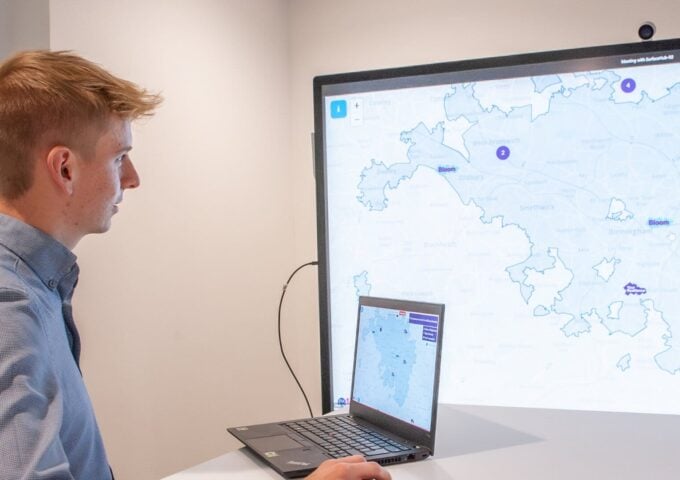
Charting the profound impact of our Young People’s programmes with Ordnance Survey
In a groundbreaking collaboration with our corporate partner, Ordnance Survey, we’ve developed a cutting-edge interactive map showcasing the transformative impact of our Young People’s programmes across the United Kingdom.
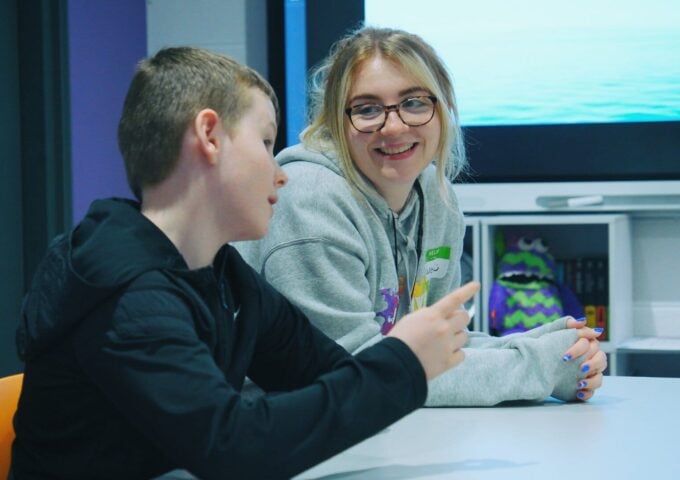
Me & Money relaunched: Tackling young people’s financial anxieties by exploring the interconnection of mental health and money
Following a highly successful 6-month pilot, which saw our Me & Money programme delivered to over 1,500 young people across the UK – we’re launching our enhanced programme today. We’re delighted to invite schools, colleges, community groups and organisations to get in touch with us to request this free programme for your young people.
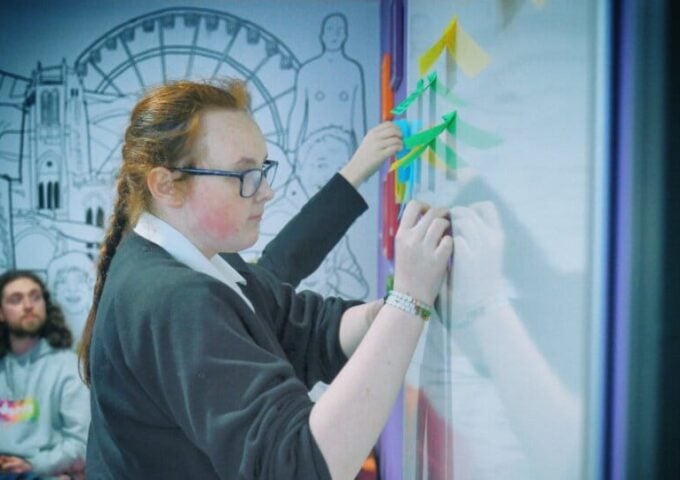
Me & Money Programme – a resounding success in effectively tackling youth financial worries as demand soars by 400%
Mental Health UK developed the innovative Me & Money pilot programme in response to the rising concerns young people experienced around money. Against the backdrop of the cost-of-living crisis, a growing body of research evidenced the complex repercussions financial concerns have on young people – ultimately posing a threat to their wellbeing and mental health if unaddressed.

Looking after children and yourself whilst working
It’s that time of year again — the sun is out, and school has finished for another academic year. But if you are a parent — whether you work in the office, hybrid, or you from home — the summer holidays might be overwhelming.

Looming pressure on parents to spend as summer holidays approach
Feedback from Mental Health UK’s Me & Money pilot programme, which launched last year, shows that young people are experiencing additional strain on their relationship with their parents/carers because of money in the approach to the school holidays.
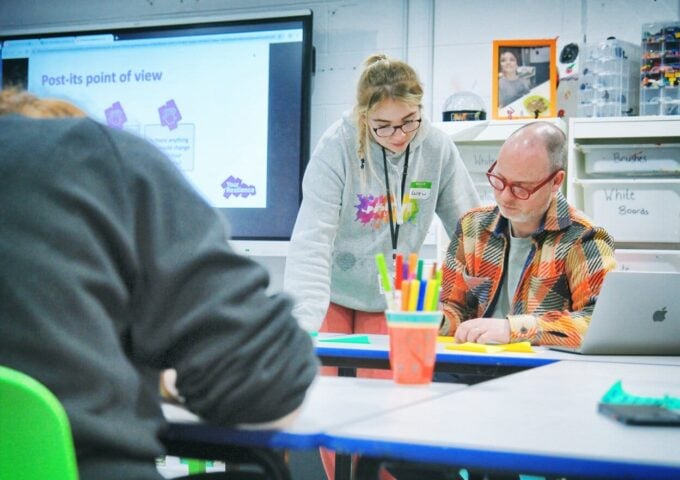
Young People’s Programmes Impact Report 2022-2023
One in six children aged 5 to 16 were identified as having a mental health problem in 2021, a significant increase from one in nine in 2017. Never has the need to support young people’s mental health been greater, and we know that early preventative support using upstream approaches like building resilience can have a positive impact.
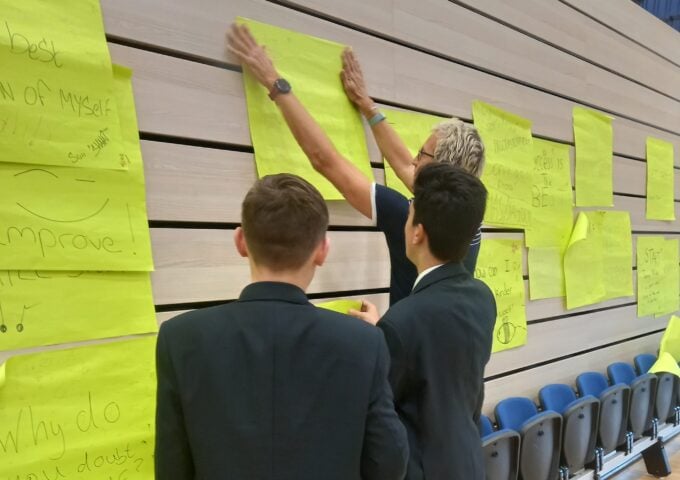
Our commitment to co-production
Our young people’s programmes, Bloom and Your Resilience have always been run with the mindset that young people’s voices and experiences need to be at the forefront in developing and delivering our workshops.

Me & Money programme
Alongside our popular Bloom and Your Resilience programmes, we have today launched a new innovative pilot programme called Me & Money, which encourages and empowers young people to explore and understand the interconnection between money and mental health.

How the cost-of-living crisis is affecting young people’s mental health
The cost-of-living crisis has undoubtably had an impact on the majority of us to a greater or lesser extent. Whilst financial concerns have been ever-present throughout the crisis, there has also been an erosive effect on people’s mental health.

Sport injury – overcoming feelings of isolation following a sports injury
Anyone who engages in a sporting activity, whether it be for pleasure or destined for a professional pathway – physical injury is an unavoidable risk. Roughly 48% of youth sport athletes have been found to have at least one injury during an athletic season, (Patel & Nelson, 2000).

Young workers twice as likely to feel lonely at work
New research by Mental Health UK explores British workers’ experiences of loneliness in the workplace and how it can impact on our mental health.

Rugby League World Cup 2021 partners with Mental Health UK to help support young players
Rugby League World Cup 2021 underlines its commitment to its communities by establishing unique partnerships with Rugby League Cares and Mental Health UK to deliver impactful campaigns to improve mental fitness and help encourage conversations around mental health.

Making peace with disappointing exam results
Every generation receiving exam results before you includes young people who’ve experienced disappointment, worry and stress related to unexpected grades. It’s not unusual to feel lost and confused about what to do next.

Dealing with uncertainty
Disappointment is natural, but do you feel completely overwhelmed or ‘out of control’ when plans change unexpectedly? Being clear on what is inside and outside our control can help uncover resilience allowing us to adapt, rebuild, recover and recognise that we can also change and develop over time.

Where does the time go?
The more ‘free time’ we have, the harder it can be to find a balance between productivity, leisure time and rest. How do you choose what to prioritise when the days are rolling into one? Using tools from the Bloom workshop on juggling time, we bust some of the myths and provide some tips on how best to utilise your time during quarantine.

Mental health problems among students on the rise reveals significant new report
The largest mental health survey ever conducted on UK university students reveals an 8% rise year-on-year of those with a serious personal, emotional, behavioural or mental health problem for which they needed professional help. The figure now stands at almost half of the student population (42%).

Mental health to be a priority in schools
As Theresa May called for mental health to be a priority in schools today, Enda Egan, Head of the Young People’s Programme, responds to the government’s announcement.
Your donation will make the difference
Just £10 could allow 25 people to access the Mental Health & Money Advice website to help them improve their financial and mental health.
Donate today

Sign up to balance, our free monthly newsletter
Each edition is packed with useful mental health tips, stories of impact and fun ways you can get involved with the charity.